
When meetings increase but problems remain
How to tell whether a meeting is useful and design sessions that produce decisions, work or learning.
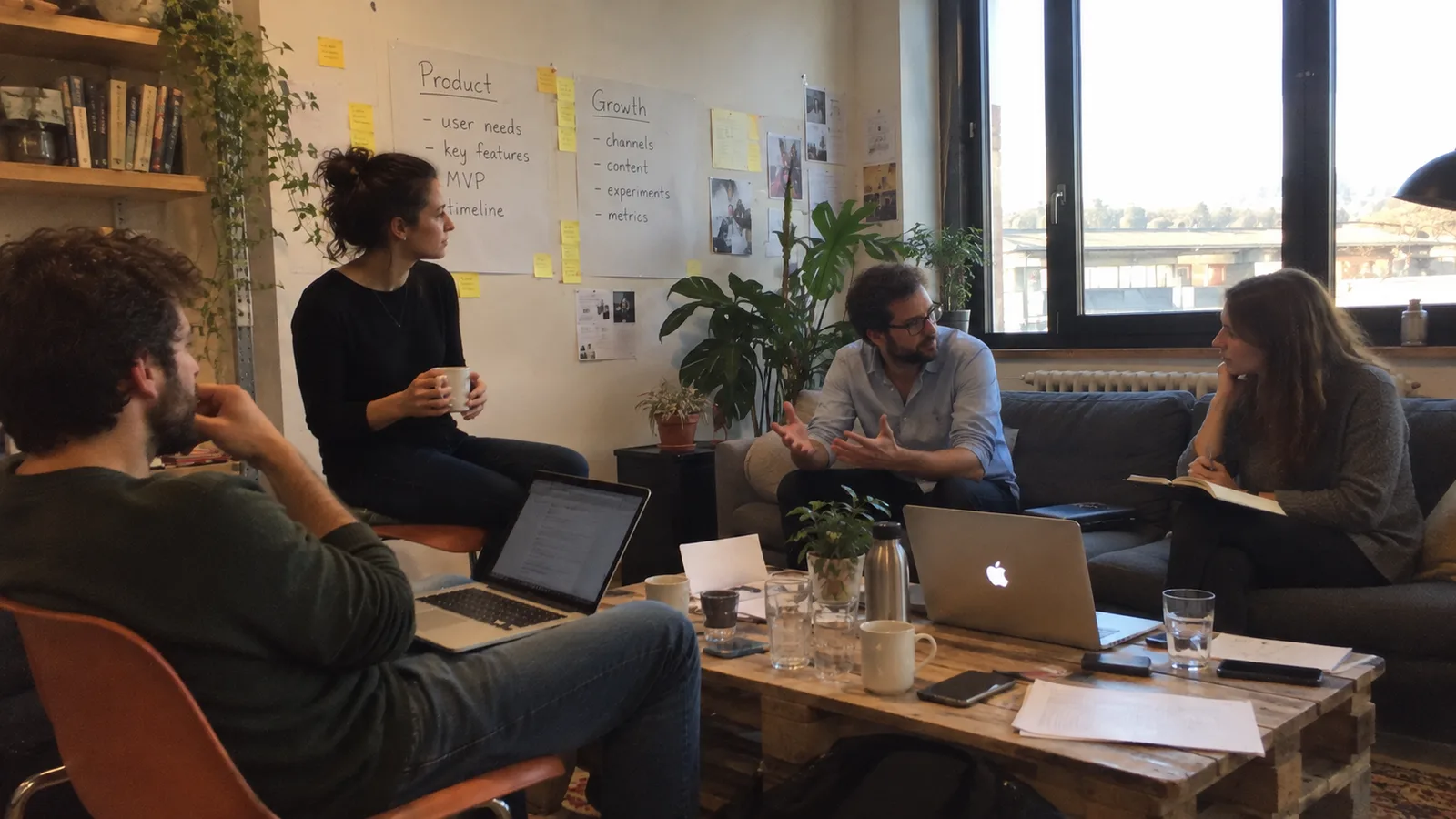
A meeting can fill the calendar without moving a problem forward. People exchange updates, repeat known issues and postpone the difficult point. At the end there is no decision, owner or verifiable next step.
First define the purpose: decide, solve a problem, work together or share information. These are different activities and need different preparation. An update can often be written; a decision needs alternatives and criteria.
First distinguish the purpose
Write the expected outcome in one sentence. Invite only the people who decide, do the work or hold necessary information. Everyone else can receive the result afterwards.
Close every topic with a recorded decision, an action with an owner and deadline, or an open question with someone responsible for checking it. A short written record prevents the same discussion from returning.
For one month, review recurring meetings by purpose and remove or redesign one that no longer produces a useful result. The goal is not fewer conversations at any cost, but better use of shared attention.
Design a useful meeting
First identify the type of work required. A meeting is useful when people must reason together, choose between alternatives or coordinate interdependent work. If the purpose is only to inform, a structured message or shared page may preserve context while giving people more time to work.
A useful agenda is more than a list of topics. For each item, state the expected outcome, the possible decision, the information needed and the person introducing it. Anyone receiving the invitation should understand why their presence matters and how to prepare.
Imagine a weekly meeting between sales and operations. If everyone reads the same numbers during the meeting, much of the time reconstructs the past. Sending indicators and anomalies beforehand lets the group focus on causes, priorities and actions.
A second scenario is a project accumulating delays. Inviting everyone to every meeting creates the appearance of coordination but often replaces a clear decision. Invite the people who can remove the block, ask for a proposal and set the moment when the result will be checked.
Reduce meetings without losing context
Duration should follow the work rather than the calendar habit. An operational exchange may need twenty-five minutes; a complex decision may need more time and preparation. Shortening the meeting without changing preparation only compresses the same unstructured discussion.
Someone should protect the result during the meeting. That person can interrupt unrelated updates, return the group to the original question and check that every action has an owner. The role is not to speak most; it is to make the move from discussion to decision visible.
When a problem lacks enough information, extending the meeting is not always useful. Assign a focused check, state the question it must answer and set a date. The next meeting will then have a starting point instead of repeating the same general request.
Minutes should not transcribe everything. Record decisions, essential reasons, actions, owners, deadlines and open questions. A short precise record helps people who were absent understand what changed and prevents different interpretations.
Review after four weeks
After four weeks, check which meetings produce a real change. Look at completed actions, reopened decisions, essential participants and time spent. If an encounter produces no decision, coordinated work or learning, change its purpose or stop it.
A sustainable reduction in meetings comes from simple rules: written updates where possible, limited invitations, preparation in advance and explicit closure. The measure is not an empty calendar; it is whether shared time produces something difficult to produce alone.
A meeting can fail even when its goal is correct because the problem is too large. Break it into smaller decisions: which constraint matters most, what information is missing, what test is possible and who chooses the next step. A sequence of clear choices is easier to manage than a general discussion.
Participation must be prepared, not merely requested. If someone should bring data, an alternative or an assessment, say so in the invitation and allow time to prepare. Otherwise the group will use the meeting to get ready and lose the time intended for the decision.
When a live meeting is really needed
Participants do not need equal speaking time. The person with information can clarify facts, the decision owner can state the criterion and the person executing the work can explain constraints. Distinguishing these contributions prevents the longest speaker from steering the outcome.
Ask people who do not attend whether the result reaches them clearly. A well-run meeting can still create confusion if a decision is communicated without context. The final message should state what changes, from when, for whom and which question remains open.
This makes the meeting one step in a process rather than the place where the process is recreated every time. Time saved can go toward preparing decisions, speaking with customers or fixing the causes that generate recurring meetings.
Protect the outcome during the meeting
The format should match the level of disagreement. If the group only needs to align on facts, a short written update is enough. If participants disagree about priorities, send the facts first and reserve the meeting for the trade-off. If the problem is unclear, hold a working session that produces a definition before asking for a decision.
Remote teams need the same discipline, with extra care around access to information. A participant who cannot see the document, dashboard or decision history will use meeting time to reconstruct context. Put the material in one place and name the question the group must answer.
Silence is not always agreement. Some participants may not understand the decision, may not feel authorized to disagree or may be considering an operational consequence that has not been discussed. Give the decision owner a moment to ask for risks and objections before closing the topic.
A meeting can be useful even when it does not produce an immediate decision, provided it produces a better next step. For example, the group may narrow the question, identify the missing evidence and assign a date for returning. The next step must still be visible and owned.
Simplify the calendar with clear rules
Recurring meetings deserve an explicit renewal decision. At the end of a quarter, ask whether the purpose still exists, whether the participants are right and whether the frequency matches the work. A meeting that once helped may need a different format after a process matures.
Do not turn meeting rules into another layer of bureaucracy. Use the smallest template that captures purpose, preparation, decision or action, owner and deadline. The template is successful when it makes the conversation easier, not when it produces a perfect record.
A useful final check is to read the invitation and the follow-up together. The invitation should make the intended result clear; the follow-up should show whether that result was reached. If the two documents describe different work, the meeting needs a clearer question or a better owner.
The change can begin with the next recurring meeting. Rewrite its purpose, send the necessary information beforehand, limit the participants and reserve the final minutes for decisions and actions. Afterward ask whether the new format helped people do something they could not have done as efficiently alone.
Communicate decisions to those who were not there
Meetings are valuable when they create shared understanding, a deliberate choice or coordinated action. When they do not, the answer is usually found in the process around them: unclear ownership, missing information, conflicting priorities or a decision that has never been assigned.
Do not judge the new format after one unusually quiet week. Observe several instances and look for repeated effects. A useful change makes preparation easier, shortens repeated explanations and leaves a clearer trail of decisions and actions for people who join the work later.
The practical test is modest: choose one meeting, define what it must produce and inspect the result four weeks later. Keep the parts that improve coordination, remove the parts that only create routine and let the calendar reflect the work rather than dictate it.
A small improvement repeated every week can return more attention to the team than a broad rule announced once and then forgotten.